Source european one piece intelligent toilet with induction flushing for hotels, hospitals, and homes
Explore 30 european one piece intelligent toilet with induction flushing options featuring siphonic drainage, wall-mounted or floor-standing designs, and smart heating systems. Compare models like T6-L14 and F5-L3 to find the right fit for your project.
Key considerations
Products List




Comprehensive Sourcing Guide
Strategic Sourcing Guide for European-Style One-Piece Intelligent Toilets with Induction Flushing
The global demand for high-efficiency, hygienic bathroom fixtures has driven significant innovation in the sanitary ware sector, particularly within the segment of European-style one-piece intelligent toilets. For B2B procurement professionals, sourcing these units requires a nuanced understanding of technical integration, supply chain reliability, and the specific operational capabilities of induction flushing systems. This guide provides a comprehensive framework for evaluating suppliers and products that align with the core keyword profile, ensuring that procurement decisions are grounded in verified product attributes and industry standards rather than marketing assertions.
Technical Architecture and Operational Specifications
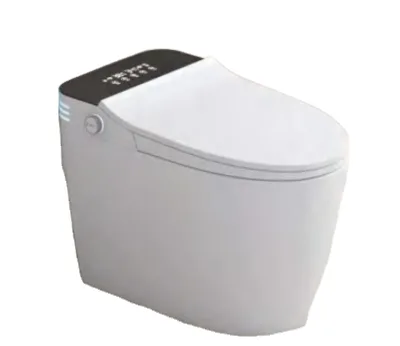
The foundation of a successful procurement strategy lies in a precise understanding of the product's technical architecture. The target category, defined by the "European one-piece" design, implies a seamless ceramic construction where the bowl and tank are fused into a single unit. This design not only enhances aesthetic continuity but also reduces the number of potential leak points compared to two-piece models. Based on observed market data, these units typically feature a ceramic material composition, which provides the necessary durability and resistance to staining and chemical degradation.
A critical differentiator in this category is the induction flushing mechanism. Unlike traditional manual flush buttons, induction systems utilize sensors to detect user presence and initiate the flush cycle automatically. The observed specifications indicate that these systems operate on a variety of working voltages, including 110V, 220V, and a range of 200-240V, ensuring compatibility with diverse regional electrical infrastructures. The flushing control method is explicitly identified as induction type, often paired with a side-pressing one-part form button for manual override or specific settings.
The physical dimensions and mounting requirements are equally vital for installation planning. The observed data highlights specific standard dimensions, such as 580x400x420mm and 700x420x530mm, which correspond to different model variants like T6-L14 and F5-L3. The rough-in configuration varies, with some models utilizing a P-Trap system and others designed for S Trap 300/400mm configurations. Buyers must verify the specific rough-in distance required by their local plumbing standards before finalizing an order. Furthermore, the drainage system is predominantly siphonic, a design choice that offers superior noise reduction and cleaning efficiency by utilizing a water seal to prevent sewer gases from entering the room.
Advanced Smart Features and User Experience
Modern intelligent toilets transcend basic sanitation functions by integrating a suite of smart features designed to enhance user comfort and hygiene. The product attributes observed in the market confirm the presence of advanced functionalities such as seat heating, seat induction, and slow-down mechanisms for the seat cover. These features are particularly relevant for the "European" style market, where user experience and luxury are key purchasing drivers.
The washing and drying systems represent a significant portion of the value proposition. The observed specifications detail a comprehensive cleaning array, including female washing, hip washing, and mobile washing modes. To ensure hygiene, the nozzles are equipped with self-cleaning and adjustment capabilities. The water delivery system supports both constant warm water and adjustable water temperature, providing a consistent user experience regardless of incoming water temperature fluctuations. The drying function utilizes warm air, eliminating the need for paper towels and reducing waste.
Safety and control interfaces are also critical components of the intelligent toilet ecosystem. The observed waterproof level is rated at IPX4, indicating protection against water splashes from any direction, which is essential for wet bathroom environments. Additional safety features include leakage protection and double water filtration systems to ensure water purity. User interaction is facilitated through double remote controls and LED screens, allowing for intuitive customization of settings. Some models also feature ambient lighting and night lights, enhancing usability in low-light conditions. The structure is consistently noted as a one-piece unit, which simplifies the internal plumbing and reduces the overall weight to approximately 46.5kgs, facilitating handling during installation.
Compliance, Standards, and Certification Verification
When sourcing international sanitary ware, verifying compliance with local and international standards is non-negotiable. While specific certification bodies were not explicitly named in the product data, the presence of standard dimensions and material specifications suggests adherence to established manufacturing norms. Buyers must rigorously verify that the supplier can provide documentation confirming that the ceramic material meets relevant safety and quality standards for potable water contact.
The electrical components, particularly the induction sensors and heating elements, must comply with regional electrical safety codes. The observed working voltage range (110V to 240V) suggests a degree of global adaptability, but buyers must confirm that the specific unit intended for export has the correct plug types and internal wiring for the destination country. The IPX4 waterproof rating is a specific numerical claim that should be validated through third-party test reports to ensure the product can withstand the humidity and water exposure typical of bathroom environments.
Furthermore, the "European" style designation often implies compliance with European Union directives regarding energy efficiency and water consumption. The observed attribute of "Water Saving Type" indicates that the product is designed to minimize water usage per flush. However, buyers should request specific water consumption data (e.g., liters per flush) to ensure it meets the strict regulations of the target market, such as the EU Ecolabel or WaterSense standards. The product origin is listed as China, a major manufacturing hub, which necessitates a thorough vetting of the supplier's quality management systems to ensure consistent adherence to these standards across all production batches.
Cost Drivers and Procurement Economics
Understanding the cost structure of intelligent toilets is essential for accurate budgeting and margin analysis. The observed price range in the market spans from 1 to 1100 USD, a wide variance that reflects differences in feature sets, build quality, and brand positioning. The lower end of this spectrum likely corresponds to basic models with essential induction flushing, while the higher end encompasses units with full smart features, including heated seats, advanced washing modes, and premium finishes.
Several factors drive the cost of these units. The integration of electronic components, such as sensors, control boards, and heating elements, significantly increases the manufacturing cost compared to traditional ceramic toilets. The complexity of the one-piece design, which requires precise molding and firing of the ceramic body, also contributes to the base price. Additionally, the "Customization: Available" attribute suggests that buyers may incur additional costs for bespoke features, such as specific color variations (observed as "Multi Color" in some models) or tailored dimensions.
The Minimum Order Quantity (MOQ) is another critical economic factor. The observed MOQ range of 1 to 100 units offers flexibility for different buyer profiles. Small retailers or contractors may benefit from the low MOQ of 1, allowing for sample testing and small-batch orders. Conversely, large-scale developers or distributors can leverage the higher MOQ tiers to negotiate better unit economics. Packaging is also a cost consideration; the observed "Carton Box" and "up and Down Foam Protection" indicate that the packaging is designed to prevent damage during transit, which adds to the overall landed cost but reduces the risk of returns due to breakage.
Supplier Evaluation and Quality Control Protocols
Selecting the right supplier is paramount when dealing with complex electronic-mechanical products like intelligent toilets. The sourcing guide recommends a multi-stage evaluation process. First, buyers should verify the supplier's production capacity and history. The observation of multiple product models (T6-L14, F5-L3, Y1-E3, G7 Pro-L, T7-L2, U1-E3, 103) indicates a manufacturer with a diverse portfolio, suggesting a mature production line capable of handling various specifications.
Quality control protocols must be robust, given the integration of sensitive electronics and ceramic components. Buyers should inquire about the supplier's in-process quality checks, specifically regarding the sealing of the ceramic body and the calibration of the induction sensors. The "Seat Material: Urea Resin" observed in some models is a standard choice for durability and heat resistance, but buyers should confirm that the resin meets formaldehyde emission standards.
Communication and responsiveness are also key indicators of supplier reliability. Since customization is available, the supplier must demonstrate the ability to handle specific requests efficiently. Buyers should request samples of the "High-Strength Carton" packaging to evaluate the protection offered during shipping. Additionally, verifying the supplier's track record for after-sales support is crucial, as electronic failures may require technical assistance or replacement parts.
Typical Applications and Market Segmentation
The European one-piece intelligent toilet with induction flushing is suited for a variety of high-end applications. The primary market segment includes luxury residential developments, where the seamless design and advanced features align with modern interior aesthetics. The "European" style, characterized by clean lines and white or multi-color finishes, fits well with contemporary bathroom designs that prioritize minimalism and functionality.
Commercial applications are another significant market for these products. Hotels, hospitals, and high-traffic public facilities benefit from the hygiene advantages of induction flushing, which eliminates the need for physical contact with the flush mechanism. The automatic flushing and self-cleaning nozzle features are particularly valuable in healthcare settings where infection control is a priority. The "Water Saving Type" attribute also makes these units attractive for commercial buildings seeking to reduce water utility costs and meet sustainability goals.
The versatility of the mounting types, including both "Wall-mounted" and "Standing Floor" options, allows these toilets to be installed in a wide range of spatial configurations. This flexibility is essential for retrofitting older buildings or designing new structures with specific spatial constraints. The observed weight of 46.5kgs suggests that while the units are substantial, they are manageable for professional installation teams, provided that the structural integrity of the floor or wall is verified.
Long-Term Procurement and Sustainability Considerations
Sourcing decisions should extend beyond the initial purchase price to consider the long-term total cost of ownership. The durability of the ceramic body and the reliability of the electronic components are critical factors. Buyers should assess the warranty terms provided by the supplier, particularly regarding the electronic modules, which are more prone to failure than the ceramic shell.
Sustainability is increasingly important in B2B procurement. The "Water Saving Type" designation aligns with global efforts to reduce water consumption. Buyers should verify the specific water usage metrics to ensure they meet local environmental regulations. Additionally, the use of "Double Water Filtration System" and "Constant Warm Water" suggests a focus on resource efficiency and user comfort, which can enhance the overall sustainability profile of the building.
Packaging and logistics also play a role in the environmental impact. The use of "High-Strength Carton" and foam protection ensures that the product arrives in pristine condition, reducing waste from damaged goods. However, buyers should inquire about the recyclability of the packaging materials to further minimize the environmental footprint.
In conclusion, sourcing European one-piece intelligent toilets with induction flushing requires a balanced approach that weighs technical specifications, compliance requirements, and cost factors. By adhering to the verification protocols outlined in this guide, procurement professionals can secure high-quality products that meet the demands of modern, hygienic, and sustainable building environments. The wide range of observed models and features offers ample opportunity for customization, ensuring that buyers can find solutions that precisely match their project requirements.
FAQs
What mounting types are available for this toilet?
Both wall-mounted and standing floor mounting types are available for this product. The specific model determines the final configuration, allowing flexibility for different bathroom layouts and installation requirements.
How does the induction flushing system operate?
The system utilizes induction sensors to detect user presence and initiate automatic flushing cycles. It operates on working voltages of 110V, 220V, or 200-240V to ensure compatibility with diverse regional electrical infrastructures.
Which smart features are included in the washing system?
The washing system includes female washing, hip washing, and mobile washing modes with warm air drying. Nozzles feature self-cleaning capabilities and adjustable settings to ensure hygiene and user comfort during operation.
Can the product be customized for specific needs?
Customization is available for this product to meet specific buyer requirements. Buyers can request tailored features, though specific details depend on the manufacturer's capacity and the selected model variant.
What is the water consumption rating for this unit?
The unit is classified as a water-saving type to minimize usage per flush. This design aligns with sustainability goals while maintaining effective cleaning performance through the siphonic drainage system.
What are the standard dimensions for the ceramic body?
Standard dimensions vary by model, with observed sizes including 580x400x420mm and 700x420x530mm. These specifications correspond to specific model numbers like T6-L14 and F5-L3 for accurate installation planning.